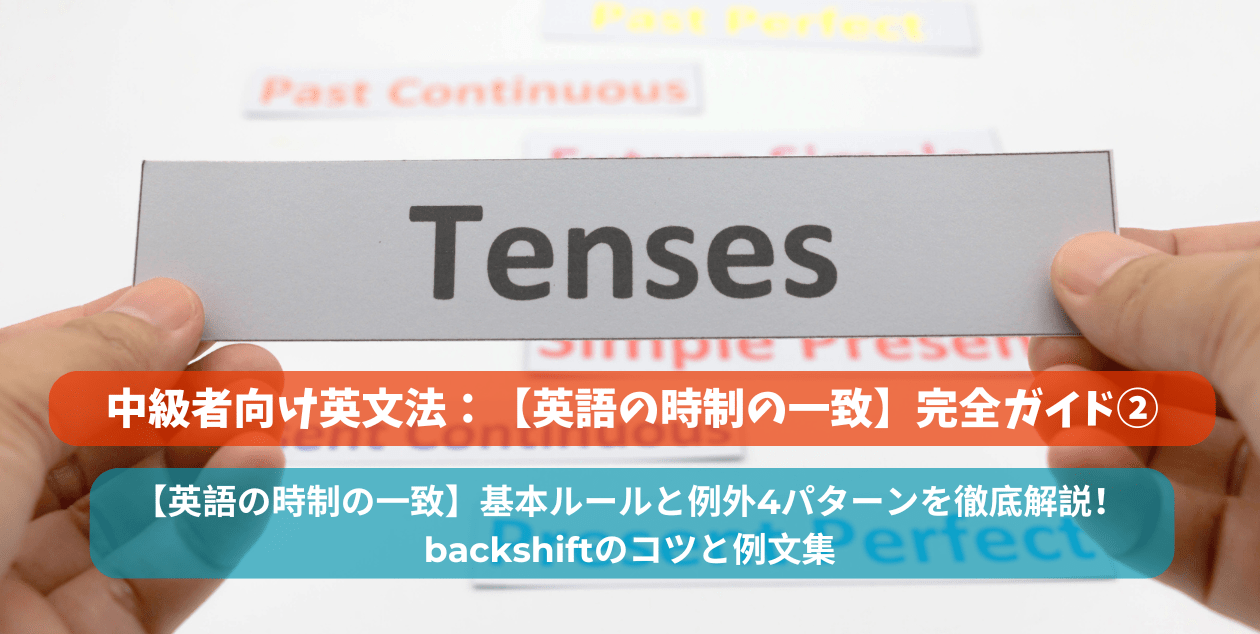
「時制の一致」と聞くと、「なんだかルールが細かくて難しそう……」と感じる方も多いのではないでしょうか。しかし、その本質はとてもシンプルです。
英語では、「いつの視点で話しているか(カメラの位置)」によって、動詞の形がドミノ倒しのように連動して変化します。この感覚をつかむだけで、ニュースの要約やビジネスでの伝言、日常の何気ない報告が驚くほどスムーズに、そして正確に伝わるようになります。
前回の記事では基本概念を学びましたが、このセクション2では、実際のコミュニケーションで即戦力となる「4つの活用パターン」を徹底解説します。基本のバックシフトから、あえて時制を変えない「生きた例外」まで、例文と一緒にマスターしていきましょう!
1. 主節が現在形のとき

主節の動詞(reporting verb)が現在形(says, thinks, knows, believes, reports など)の場合、時制の一致は起きません。従属節の動詞は、内容が表す「実際の時制」をそのまま保ちます。
これは「今この瞬間に言っている・思っている」ことを報告しているため、カメラが現在にあり、従属節の内容もその現在の視点から見た時制で表現されるからです。
💡 ポイント
- 主節が現在形 → 従属節の時制は変化しない
- 「今この瞬間に言っている・思っている」ことなので、カメラは現在にある
- that は会話では省略されることが多い(書き言葉では明示推奨)
A-1. 現在・習慣・状態を伝える
日常会話・職場での伝言・ニュースの要約など、「今どういう状況か」「どんな意見を持っているか」を現在形で報告するパターンです。
She says (that) she likes her new job.
彼女は新しい仕事が気に入っていると言っています。
He thinks (that) the proposal is reasonable.
その提案は妥当だと彼は思っています。
My colleague says (that) the printer on the third floor is broken.
3階のプリンターが壊れていると同僚が言っています。
The website says (that) the store closes at 9 p.m.
そのウェブサイトによると、そのお店は午後9時に閉まります。
My manager knows (that) I‘m working from home today.
今日私が在宅勤務していることを上司は知っています。
A-2. 現在完了・未来も含む
主節が現在形なら、従属節に現在完了や will を使っても問題ありません。内容の時間関係を忠実に反映します。
She says (that) she has already sent the invoice.
もう請求書を送ったと彼女は言っています。
He believes (that) the situation will improve soon.
状況はすぐに改善すると彼は信じています。
The report shows (that) sales have grown by 15% this year.
今年の売上が15%増加したことをそのレポートは示しています。
📢 よく使う reporting verb のリスト(主節が現在形)
| say | tell | think | believe |
| know | feel | report | show |
| suggest | indicate | mention | explain |
| announce | confirm | agree | argue |
これらの動詞は日常会話・ビジネス・メディアで頻繁に登場します。現在形で使われているときは、従属節の時制はそのままです。
2. 主節が過去形のとき ─「一段階過去へ」
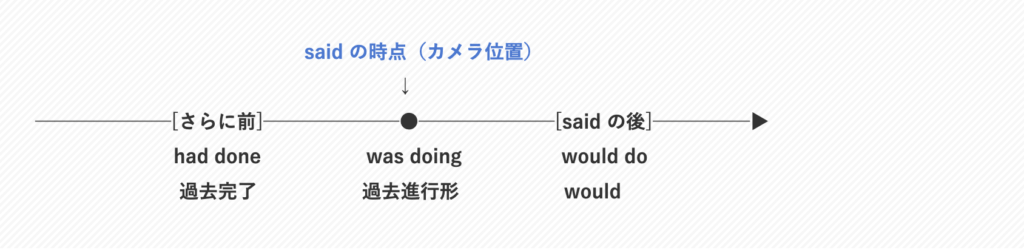
主節の動詞が過去形(said, told, thought, believed, knew, reported など)になると、従属節の動詞も「一段階過去に引き寄せられる」のが英語の基本ルールです。これを backshift(後退) と呼びます。
▶ 時間軸のイメージ
2-1. 時制変化の対応表
| 元の時制(直接話法) | → 時制一致後(間接話法) | 変化のパターン |
|---|---|---|
| am / is / are(現在形) | was / were(過去形) | 現在 → 過去 |
| am / is / are doing(現在進行形) | was / were doing(過去進行形) | 現在進行 → 過去進行 |
| have / has done(現在完了) | had done(過去完了) | 現在完了 → 過去完了 |
| did(過去形) | had done(過去完了) | 過去 → 過去完了 |
| will(未来) | would | will → would |
| can(能力・可能性) | could | can → could |
| may(可能性・許可) | might | may → might |
| must(義務) | had to(または must のまま) | 義務は had to、推量は must have done |
補足:mustについて: 過去の推量を表す場合は “must have done” になるのが一般的です。
- 例:He said, “It must be a mistake.”
→ He said that it must be a mistake. (その時そうに違いないと思った) - 例:He said, “It must have been a mistake.”
→ He said that it must have been a mistake. (その時より前にそうだったに違いないと思った)
2-2. 現在形 → 過去形
最もよく登場するパターンです。「その時点で〜だった」という意味になります。
直接: “The new update is really useful,” she said.
間接: She said (that) the new update was really useful.
その新しいアップデートはとても便利だと彼女は言った。
直接: “I’m not sure about the timeline,” the manager said.
間接: The manager said (that) he wasn’t sure about the timeline.
タイムラインについて自信がないとマネージャーは言った。
He told me (that) the café on the corner was closed for renovation.
角のカフェが改装中で閉まっていると彼が教えてくれた。
She mentioned (that) she was really happy with the result.
結果にとても満足していると彼女は言っていた。
My coworker said (that) the Wi-Fi on the second floor was really slow.
2階のWi-Fiがとても遅いと同僚が言っていた。
The client said (that) they needed more time to review the contract.
顧客は契約書を検討するためにもう少し時間が必要だと言っていた。
My boss told me (that) the budget was finally approved.
上司は予算がようやく承認されたと教えてくれた。
He said (that) the app was easy to navigate.
そのアプリは操作しやすいと彼は言っていた。
She mentioned (that) the conference room was available that afternoon.
その午後は会議室が空いていると彼女は言っていた。
2-3. 現在進行形 → 過去進行形
「言った時点で、ちょうど〜をしている最中だった」という意味を表します。
直接: “We are reviewing your application,” the HR staff said.
間接: The HR staff said (that) they were reviewing our application.
人事スタッフは、私たちの応募書類を現在審査中だと言った。
She said (that) she was working from home that day.
その日は在宅勤務中だと彼女は言っていた。
He told me (that) his team was testing the new feature.
彼のチームが新機能をテスト中だと彼は言っていた。
The client said (that) they were still considering our offer.
顧客はまだ私たちの提案を検討中だと言っていた。
My friend said (that) she was looking for a new apartment in Osaka.
大阪で新しいアパートを探していると友人が言っていた。
The support team said (that) they were working on fixing the issue.
その問題の修正に取り組んでいるとサポートチームは言っていた。
She mentioned (that) she was preparing for a presentation.
プレゼンの準備をしていると彼女は言っていた。
He said (that) the delivery driver was on his way.
配達ドライバーが向かっている途中だと彼は言っていた。
They reported (that) the system was updating at that moment.
その時、システムはアップデート中だと彼らは報告した。
2-4. 現在完了 → 過去完了
「言った時点で、すでに完了していた」ことを表します。had done(have+過去分詞) を使うことで、報告した時点よりもさらに前に起きた出来事であることが明確になります。
直接: “I’ve already submitted the report,” she said.
間接: She said (that) she had already submitted the report.
レポートはもう提出済みだと彼女は言った。
He said (that) he had worked there for over ten years.
10年以上そこで働いていたと彼は言った。(現在完了の継続→過去完了)
The team reported (that) they had completed all the tests.
すべてのテストが完了したとチームは報告した。
She told me (that) she had just moved to a new place in Yokohama.
横浜の新しい場所に引っ越したばかりだと彼女は言っていた。
He mentioned (that) he had never tried online banking before.
ネットバンキングをそれまで使ったことがなかったと彼は言っていた。
My colleague said (that) she had finished the project ahead of schedule.
予定より早くプロジェクトを終えたと同僚は言っていた。
The client mentioned (that) they had received our proposal.
私たちの提案を受け取ったと顧客は言っていた。
She said (that) she had been to that restaurant several times.
そのレストランには何度も行ったことがあると彼女は言っていた。
He told me (that) he had already updated the software.
すでにソフトウェアをアップデートしたと彼は言っていた。
She told me (that) she had never used this software before.
このソフトウェアをそれまで使ったことがないと彼女は言っていた。
2-5. 過去形 → 過去完了
「言った(said)よりもさらに前に起きた出来事」を表すために、過去完了(had done)を使います。ただし、文脈が明確な場合は過去形のままでも許容されます。
直接: “I saw the presentation last week,” he said.
間接: He said (that) he had seen the presentation the week before.
先週そのプレゼンを見たと彼は言った。
She said (that) she had called the office but no one answered.
オフィスに電話したが誰も出なかったと彼女は言った。
He told me (that) he had visited the client the previous day.
前日に顧客を訪問したと彼は言っていた。
My manager said (that) she had approved the budget earlier that morning.
その日の朝早くに予算を承認したと上司は言っていた。
She mentioned (that) she had sent the email the night before.
前夜にメールを送ったと彼女は言っていた。
He said (that) he had met with the team on Monday.
月曜日にチームと会ったと彼は言っていた。
My colleague said (that) the client had cancelled the meeting the day before.
前日にクライアントがミーティングをキャンセルしたと同僚が言っていた。
He told me (that) he had missed the last train the night before.
前の晩、終電を逃したと彼は私に言っていた。
She said (that) she had left her laptop at the office.
ノートPCをオフィスに置いてきてしまったと彼女は言っていた。
補足:文脈が明確な場合は過去形のままでも許容されます。特に before や after などの前後関係が明らかな接続詞がある場合は、現代英語では過去形のままにすることが多々あります。
2-6. will → would(過去の時点から見た未来)
「言った時点では、まだこれから起きることだった」という意味で would を使います。would は過去の時点での「未来」を表します。
直接: “I’ll send you the file after the meeting,” he said.
間接: He said (that) he would send me the file after the meeting.
ミーティングの後でファイルを送ってくれると彼は言った。
She said (that) the results would be ready by Thursday.
木曜日までに結果が出ると彼女は言っていた。
He told me (that) he would be working late that evening.
その夜は残業すると彼は言っていた。(will be doing → would be doing)
The manager said (that) the new policy would take effect next month.
新しいポリシーは翌月から施行されると上司は言っていた。
She told me (that) she would let me know if anything changed.
何か変わったら知らせると彼女は言っていた。
The forecast said (that) it would rain later in the afternoon.
午後遅くに雨が降ると天気予報が伝えていた。
He mentioned (that) he would check with his supervisor.
上司に確認すると彼は言っていた。
My colleague said (that) she would finish the task by the end of the week.
週末までにその仕事を終えると同僚は言っていた。
The announcement said (that) the store would close early on Sunday.
日曜日は早めに閉店すると告知されていた。
They told us (that) they would join the call from home.
自宅からその通話に参加すると彼らは私たちに言っていた。
My friend said (that) he would move to Tokyo the following year.
翌年東京に引っ越すつもりだと友人が言っていた。
2-7. can → could / may → might
助動詞も時制の一致の対象です。can は could、may は might になります。
She said (that) she could help me with the translation.
翻訳を手伝えると彼女は言っていた。(can → could)
He told me (that) he couldn’t find the file anywhere.
ファイルがどこにも見当たらないと彼は言っていた。
The doctor said (that) it might take a few days to get the results.
結果が出るまで数日かかるかもしれないと医師は言っていた。(may → might)
She said (that) the package might arrive a day late.
荷物が1日遅れて届くかもしれないと彼女は言っていた。
He mentioned (that) he could finish the report by Friday.
金曜日までにレポートを終えられると彼は言っていた。
My friend said (that) she might join us for dinner.
夕食に参加するかもしれないと友人は言っていた。
The technician said (that) he could fix the problem remotely.
その問題はリモートで修正できると技術者は言っていた。
She told me (that) the meeting might be postponed.
会議が延期になるかもしれないと彼女は言っていた。
He told me (that) he couldn’t log in to his account.
自分のアカウントにログインできないと彼は言っていた。
She said (that) the package might arrive a day late due to the weather.
天候のせいで荷物が1日遅れて届くかもしれないと彼女は言っていた。
2-8. must の変化
must は義務の場合は had to に、推量の場合はそのまま must+過去分詞 を使うことが多いです。
He said (that) he had to submit the form by noon.
正午までにフォームを提出しなければならないと彼は言っていた。(must → had to:義務)
She said (that) it must have been a mistake.
それは間違いだったに違いないと彼女は言っていた。(推量のmustはそのまま)
My manager said (that) we had to complete the training by the end of the month.
月末までにトレーニングを完了しなければならないと上司は言っていた。
He mentioned (that) it must be difficult to work in such conditions.
そんな状況で働くのは大変に違いないと彼は言っていた。
He said (that) he had to leave by six.
6時までには出なければならないと彼は言っていた。(must → had to)
They said (that) it must have been a system error.
それはシステムエラーだったに違いないと彼らは言っていた。(推量の must はそのまま)
3. 時制を変えない場合(意味上の例外)

時制の一致はあくまで「原則」です。実際の英語では、状況・意図・文脈によって時制一致をしない方が自然な場合が多く存在します。これを「例外」として覚えておくことは大切ですが、「ルールを破っている」ではなく「意味を正確に伝えるための選択をしている」と考えてください。
3-1. 普遍的な真理・科学的事実
いつ・どこでも成立する事実(科学的真理・自然の法則・数学的事実)は、主節が過去形であっても現在形のままにします。「過去に言われた」にかかわらず、その真理は今も変わらないからです。
Our teacher explained (that) the Earth goes around the Sun.
先生は地球が太陽の周りを回ると説明した。(went ではなく goes)
The textbook states (that) light travels at about 300,000 km per second.
光は毎秒約30万キロ進むとそのテキストには書いてある。
She mentioned (that) plants need sunlight to produce energy.
植物はエネルギーを生産するために日光が必要だと彼女は述べた。
He said (that) the total is 247.
合計は247だと彼は言った。(計算結果は普遍的 → 現在形)
The doctor explained (that) the heart pumps blood around the body.
心臓は体中に血液を送り出すと医師は説明した。
He said (that) water boils at 100°C.
水は100℃で沸騰すると彼は言った。
She mentioned (that) coffee contains caffeine.
コーヒーにはカフェインが含まれていると彼女は言っていた。
My professor mentioned (that) carbon dioxide is a greenhouse gas.
二酸化炭素は温室効果ガスだと教授は述べた。
He told us (that) Tokyo is the capital of Japan.
東京は日本の首都だと彼は言った。
The guide explained (that) this building has 50 floors.
このビルは50階建てだとガイドは説明した。
The IT support explained (that) this system requires a secure connection.
ITサポートは、このシステムには安全な接続が必要だと説明した。(システムの変わらない仕様)
The trainer said (that) muscles grow when you rest, not when you train.
筋肉はトレーニング中ではなく、休んでいるときに成長するとトレーナーが言っていた。
⚠ 注意:科学的真理でも過去形が使われる場合がある
同じ事実でも、「その時点の状況」として述べる場合は時制一致することがあります。
She mentioned that water was boiling when she came back.
→「帰ってきたとき沸騰していた」(その時点の状況)
She mentioned that water boils at 100°C.
→「水は100℃で沸騰する」(普遍的真理)
3-2. 現在も変わらない状況・事実
「言った当時の状況」ではなく「今現在も変わっていない事実」として話し手が認識している場合、現在形のままにすることが自然です。この選択は話し手の判断に委ねられており、どちらの時制も文法的に正しい場合があります。
📌 時制一致あり vs. なし ─ 意味の違いに注目
| 時制一致 | 例文 | 意味 |
|---|---|---|
| あり | She said (that) she lived in Osaka. | 「その時点で」大阪に住んでいた。(今はどこかわからない) |
| なし | She said (that) she lives in Osaka. | 彼女は大阪に住んでいると言っていた。(今も住んでいる、という話し手の認識) |
「現在も有効」と判断するのは話し手です。文脈・場面・どちらの情報を伝えたいかによって使い分けましょう。
He mentioned (that) he works at a startup in Shibuya.
渋谷のスタートアップで働いていると彼は言っていた。(今も勤務中)
She told me (that) her brother studies medicine at university.
お兄さんが大学で医学を勉強していると彼女は言っていた。(今も在学中)
My friend said (that) she goes to the gym every morning.
毎朝ジムに行くと友人が言っていた。(今も続いている習慣)
He said (that) he doesn’t drink coffee.
コーヒーを飲まないと彼は言っていた。(今も飲まない)
She told me (that) her company has offices in three countries.
彼女の会社は3か国にオフィスを持っていると言っていた。(今も)
My colleague mentioned (that) she prefers working remotely.
リモートで働く方が好きだと同僚は言っていた。(今も変わらない好み)
He said (that) his daughter plays the piano.
娘さんがピアノを弾くと彼は言っていた。(今も続けている)
She told me (that) the app costs $9.99 per month.
そのアプリは月額9.99ドルだと彼女は言っていた。(今も同じ価格)
My manager mentioned (that) the office opens at 8:30.
オフィスは8時半に開くと上司は言っていた。(今も同じ営業時間)
He said (that) he has two children.
子どもが2人いると彼は言っていた。(今も変わらない事実)
He said (that) he doesn’t drink alcohol.
お酒を飲まないと彼は言っていた。(今も飲まない習慣)
The manager mentioned (that) our main target audience is in their 20s.
メインのターゲット層は20代だとマネージャーは言っていた。(現在も変わらないビジネスの状況)
3-3. 歴史的事実
歴史的な出来事や確定した過去の事実は「記録として確立した過去」なので、時制の一致にかかわらず過去形のままが自然です。現在形に変える必要はありません。
The teacher explained (that) World War II ended in 1945.
先生は第二次世界大戦が1945年に終わったと説明した。
She mentioned (that) the company was founded in 1998.
その会社は1998年に設立されたと彼女は述べた。
He said (that) the first iPhone was released in 2007.
最初のiPhoneは2007年に発売されたと彼は言っていた。
The guide explained (that) this castle was built in the 16th century.
このお城は16世紀に建てられたとガイドは説明した。
She told us (that) the Berlin Wall fell in 1989.
ベルリンの壁は1989年に崩壊したと彼女は言った。
My professor mentioned (that) Einstein published his theory in 1905.
アインシュタインは1905年に理論を発表したと教授は述べた。
He said (that) the Tokyo Olympics were held in 1964.
東京オリンピックは1964年に開催されたと彼は言った。
The documentary explained (that) the Titanic sank in 1912.
タイタニック号は1912年に沈没したとそのドキュメンタリーは説明した。
The article said (that) the bridge was completed in 2010.
その橋は2010年に完成したと記事に書いてあった。
3-4. 仮定法の動詞形(さらに変化させない)
仮定法の動詞形(were, had done など)はすでに「現実ではない仮定」を表す特別な形です。時制の一致によってさらに変化させる必要はありません。
He said (that) he wished he were there.
そこにいられたらよかったのにと彼は言った。(were はそのまま)
She mentioned (that) if she had more time, she would learn French.
もっと時間があればフランス語を学ぶのにと彼女は言っていた。
He said (that) he would have called if he had known.
知っていれば電話していたのにと彼は言った。(had known はそのまま)
My friend said (that) she wished she could travel more.
もっと旅行できたらいいのにと友人は言っていた。
He mentioned (that) if he were the CEO, he would change the policy.
もし自分がCEOなら方針を変えるのにと彼は言っていた。
She said (that) she would have joined us if she had been available.
時間があれば参加していたのにと彼女は言っていた。
She told me (that) if she were the manager, she would change the policy.
もし自分がマネージャーなら、その方針を変えるのにと彼女は言っていた。
He said (that) he would have joined us if he had known about the event.
そのイベントのことを知っていれば参加していたのにと彼は言った。
She said (that) she felt as if she were still a student.
まだ学生であるかのように感じると彼女は言っていた。
They said (that) if it were cheaper, they would use the service more often.
もっと安ければ、そのサービスをもっと頻繁に使うのにと彼らは言っていた。
4. 時制一致 総整理表

| 主節の時制 | 従属節の動詞の変化 | 例文 |
|---|---|---|
| 現在形(say / think) | 変化なし(内容の時制のまま) | She says she is tired. 疲れていると彼女は言っている。 |
| 過去形(said) | 一段階過去へ(backshift) | She said she was tired. 疲れていると彼女は言った。 |
| 過去形 + 現在完了→過去完了 | have done → had done | She said she had finished it. それを終えたと彼女は言った。 |
| 過去形 + will → would | 未来 → 過去から見た未来 | He said he would call later. 後で電話すると彼は言った。 |
| 例外:普遍的真理 | 現在形のまま | He said water boils at 100°C. 水は100℃で沸騰すると彼は言った。 |
| 例外:現在も有効な事実 | 現在形のまま(話し手の判断) | She said she lives in Osaka. 大阪に住んでいると彼女は言った。 |
| 例外:歴史的事実 | 過去形のまま | She said it was built in 1950. それは1950年に建てられたと彼女は言った。 |
練習問題

✏ 練習 A:主節が現在形
以下の直接話法を、主節が現在形の間接話法に書き換えなさい。
- “The meeting starts at 10,” my colleague says.
- “We have already sent the contract,” the sales rep says.
- “I’ll check it right away,” she tells me.
✏ 練習 B:主節が過去形
次の直接話法を、主節が過去形の間接話法に書き換えなさい。
- “I’m working on the presentation right now,” she said.
- “We have already booked the venue,” the organizer said.
- “The train will be delayed by about 20 minutes,” the announcement said.
✏ 練習 C:例外を判断する
次の文で、括弧内のどちらの時制が適切か答えなさい。
- My teacher explained that the Sun (rises / rose) in the east.
- He told me that his sister (works / worked) at a hospital in Kyoto.
- She mentioned that coffee (contains / contained) caffeine.
解答
✏ 練習 A:主節が現在形
- My colleague says (that) the meeting starts at 10.
- The sales rep says (that) they have already sent the contract.
- She tells me (that) she’ll check it right away.
✏ 練習 B:主節が過去形
- She said (that) she was working on the presentation right then.
- The organizer said (that) they had already booked the venue.
- The announcement said (that) the train would be delayed by about 20 minutes.
✏ 練習 C:例外を判断する
- rises(普遍的真理 → 現在形のまま)
- 両方可。works = 今も働いている、worked = その時点で働いていた
- contains(科学的事実 → 現在形のまま)
Column:ネイティブは時制の一致をどう使っているか?
実際のネイティブスピーカーの英語では、特にカジュアルな会話において、時制の一致を厳密に守らないことがよくあります。例えば「She said she is coming later.」のように、said の後でも is を使うことが見られます。これは話し手が「今もそれが有効な情報だ」と感じているためで、文法的にも許容されます。
一方で、ビジネスメール・ニュース記事・学術論文では時制の一致を正確に守ることが信頼感につながります。学習の初期段階では「原則として時制を一致させ、例外は意味で判断する」というスタンスで進めましょう。
まとめ:時制の一致を使いこなす3つの鍵

今回の記事では、時制の一致の核心部分を学びました。大切なポイントを振り返りましょう。
- 主節が現在なら変化なし、過去なら「一段階過去(Backshift)」へ 「誰かが言った(said)」という過去の地点にカメラが移動したら、中身の動詞も一緒に過去へ引き寄せられます。
- 「今も変わらないこと」は現在形のまま 普遍的な真理や、話し手が「今も事実だ」と強調したい場合は、あえて時制を一致させないのが自然な英語です。
- 歴史的事実と仮定法は形を変えない 確定した過去の記録や、現実ではない「仮定」の話は、その形自体に意味があるため、時制の一致の影響を受けません。
時制の一致は、単なる文法上の縛りではなく、「情報の鮮度や事実関係を正確に伝えるためのツール」です。まずは基本のパターンB(過去形への変化)に慣れ、徐々に例外パターンを使い分けられるようになると、あなたの英語はより知的で信頼されるものへと進化します。
次のステップ
時制の一致のルールが整理できたら、次は「言葉の置き換え」に挑戦です。 次回は、直接話法から間接話法へ切り替える際にセットで変化する「代名詞」や「時・場所を表す語句(here → thereなど)」のルールを詳しく解説します。


📖 さらなる英語学習をお考えの方へ

基礎から学び直したい方はこちら
語彙力を強化したい方はこちら

本格的な英語学習方法を知りたい方はこちら

このガイドは、35年以上の英語教育経験を持つ矢野晃によって作成されました。数千人の講師を育て数千人の生徒を指導してきた実績に基づく、実践的で効果的な学習方法をお届けしています。